Beyond KuSwap: A Comprehensive List of Top DeFi Protocols on the KCC Ecosystem
The KuCoin Community Chain has evolved into a thriving ecosystem for decentralized finance, offering users a diverse array of protocols to explore beyond the flagship KuSwap platform. Whether you are looking to swap tokens, provide liquidity, lend assets, or stake your holdings, the KCC ecosystem has options worth considering. This guide provides an overview of the most notable DeFi protocols currently operating on KCC.
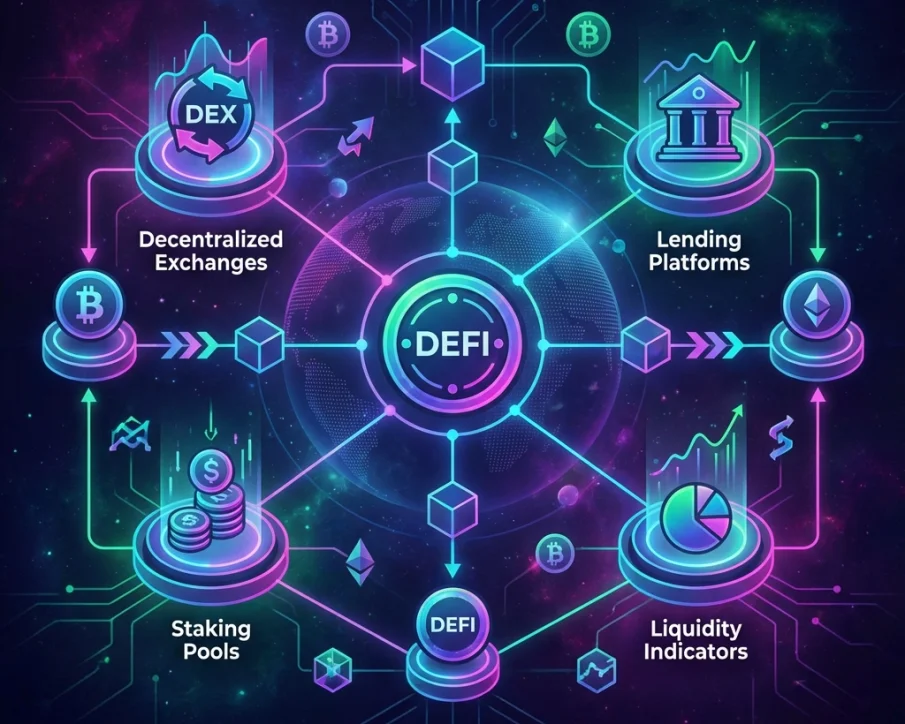
Decentralized Exchanges
MojitoSwap
MojitoSwap stands as one of the most prominent decentralized exchanges on KCC, often competing directly with KuSwap for market share. The protocol received significant recognition when it won $300,000 in KCC's "Unicorn Contest," a program designed to incentivize quality projects to build on the network.
The platform operates as an automated market maker (AMM), allowing users to swap tokens without relying on traditional order books. MojitoSwap offers several key features including standard token trading, yield farming through its "Bar" (Farm) feature, and staking through specialized pools called "Wine Pools."
The native token of MojitoSwap is MJT, which plays a central role in the platform's governance and reward distribution. Users who provide liquidity or participate in farming receive MJT tokens as rewards. The protocol has plans to expand its offerings with features like Cocktail Tickets and NFT integration.
MojitoSwap has consistently captured a significant portion of KCC's Total Value Locked, demonstrating strong user adoption and confidence in the platform's security and functionality.
KuSwap
While this article focuses on protocols beyond KuSwap, it would be incomplete without acknowledging the original DEX on KCC. KuSwap launched in June 2021 and received $100,000 through the Unicorn Contest. The platform pioneered DeFi on KCC and continues to serve as a major liquidity hub for the ecosystem.
KuSwap's native token KUS powers the protocol's governance through KUSDAO and rewards liquidity providers through farming incentives. The recent upgrade to KuSwap v3 introduced enhanced tokenomics and the veKUS system for improved governance participation.
Klein Finance
For traders who primarily deal with stablecoins, Klein Finance offers a specialized solution. This DEX focuses specifically on low-slippage and deep-liquidity stablecoin trading, making it ideal for users who need to swap between different stable assets without significant price impact.
Stablecoin-focused DEXs like Klein Finance serve an important role in the ecosystem by providing efficient conversion between assets like USDT, USDC, and various bridged stablecoins. The protocol optimizes its bonding curves specifically for assets that should trade at or near parity.
Lending and Borrowing
Torches Finance
Torches Finance brings decentralized lending to the KCC ecosystem. The protocol allows users to deposit assets as collateral and borrow against them, or simply earn interest by supplying liquidity to lending pools.
Lending protocols like Torches Finance create important DeFi primitives that enable more complex financial strategies. Users can leverage their holdings, access liquidity without selling their assets, or earn passive income by becoming lenders. The protocol maintains over-collateralization requirements to protect lenders from borrower defaults.
Liquid Staking
sKCS.io
Liquid staking has become an essential DeFi primitive, and sKCS.io brings this functionality to KCS holders on the KCC network. The protocol allows users to stake their KCS tokens while receiving a liquid derivative token in return.
This approach solves a common problem in staking: the opportunity cost of locked assets. With traditional staking, your tokens are typically unavailable for other uses during the staking period. Liquid staking protocols give you a receipt token that represents your staked position, which you can then use in other DeFi applications.
Users who stake through sKCS.io continue earning staking rewards while their liquid staked tokens can be utilized in yield farming, as collateral for loans, or traded on decentralized exchanges.
Infrastructure and Tools
KCC Bridge
While technically a piece of infrastructure rather than a standalone protocol, the KCC Bridge deserves mention for its critical role in the ecosystem. This official bridge enables users to transfer tokens between KCC and other major networks including Ethereum, Binance Smart Chain, Polygon, Avalanche, and Fantom.
Without reliable bridging infrastructure, DeFi ecosystems become isolated. The KCC Bridge provides the connectivity that allows capital to flow into KCC from larger networks, enabling all the other protocols in the ecosystem to function with adequate liquidity.
KCC Explorer
The block explorer at explorer.kcc.io provides essential transparency for all on-chain activity. Users can verify transactions, check token contracts, view wallet balances, and analyze network statistics. While not a DeFi protocol per se, blockchain explorers are fundamental tools for anyone seriously engaging with decentralized finance.
LaunchPads and IDO Platforms
KCC Starter
Initial DEX offerings (IDOs) allow new projects to distribute their tokens and raise capital in a decentralized manner. KCC Starter has facilitated fair launches for various projects building on the KCC ecosystem.
These platforms give community members early access to promising new tokens while providing projects with a built-in audience of potential users. Participation typically requires holding specific tokens or meeting other criteria set by each individual launch.
Emerging Opportunities
The KCC ecosystem continues to expand with new protocols launching regularly. Areas seeing development include NFT marketplaces, gaming platforms with play-to-earn mechanics, and cross-chain interoperability solutions.
As KCC evolves toward version 3.0, expect to see increasing focus on Layer 2 scaling solutions and enhanced EVM compatibility. These improvements will likely attract additional developers and protocols to the network.
Evaluating Protocol Safety
Before depositing funds into any DeFi protocol, conducting due diligence is essential. Look for protocols that have undergone smart contract audits by reputable security firms. Check the team's track record and transparency about their identities and backgrounds. Examine the protocol's total value locked over time for stability indicators.
Start with small amounts when trying new platforms and gradually increase your exposure as you gain confidence in a protocol's reliability. The KCC ecosystem offers genuine opportunities, but as with all DeFi, risks remain inherent in the technology.
Looking Forward
The KCC DeFi landscape has matured significantly since the network's launch. From decentralized exchanges and lending protocols to liquid staking and launchpads, users now have access to a full suite of financial tools. As the ecosystem continues developing and attracting new projects, the options for yield generation and asset management will only expand.
More to Read:


Previous Posts: